• You're one step from joining Tiny Home Forum – Space Saving Hacks, Off-Grid Living & DIY Builds.
    Create a free account to post, follow threads, and never miss an update.  Sign up free →

Tiny Homes Trend on Multi-Functional Furniture

Alan

Administrator
Staff member
Admin
Moderator
Joined
Feb 21, 2025
Messages
269
This has been a trend in small and medium sized homes. Even in places like Japan and EU, studio units are built to maximize space with so many features. That's even why there are flooding beds, tables, chairs etc. Designers are now creating amazing not just functional but also aesthetic foldable, stackable, and convertible furniture pieces for small spaces.

This is good for tiny homes because it maximizes every inch, keeps things organized, and looks clever but custom pieces can get expensive, and constant rearranging can feel like a chore.

What do you think of this new trend?
 
I think this is what Tiny Homes were built with. stackable, foldable, multi-use and convertible furniture. This was a trend early in the 90s too. So it's making a comeback for tiny houses.
 
No doubt it’s a cool piece of engineering. but sometimes it feelss like you are living for your furniture instead of your furniture working for you.
 
Just a thought on Tiny Home & Van & RV Living that may help develop some understanding on what we experience in this contemporary minimalism. In 1912 in Weimer Germany a school of architecture known as the "Bauhaus" was formed by an architect named Walter Gropius whose ideas have spread globally and endured.

Often the Bauhaus home is seen as a "machine you live in". One which is efficient in most every way.

Bauhaus design emphasizes functionality, simplicity, and the unity of art and technology, characterized by geometric shapes, clean lines, minimal ornamentation, use of industrial materials (steel, glass, concrete), primary colors with neutrals, open floor plans, and a philosophy of mass-producible, accessible design, creating a cohesive, modern aesthetic.
Here are 7 key characteristics:
  1. Functionality (Form Follows Function):
    The design's purpose dictates its aesthetic; beauty arises from efficiency and utility, not added decoration.
  2. Geometric Shapes & Clean Lines:
    Reliance on basic forms like squares, circles, and triangles, combined with sharp, uncluttered lines.
  3. Minimalism & Simplicity:
    Stripping designs down to essential elements, eliminating excess ornamentation for clarity.
  4. Innovative Materials:
    Embracing modern, industrial materials like steel, glass, and concrete in their raw, honest forms.
  5. Primary Colors & Neutrals:
    Using bold, pure primary colors (red, yellow, blue) alongside a palette of black, white, and gray.
  6. Unity of Art & Craft:
    Bridging the gap between fine art and applied arts, integrating artistic expression with mass production.
  7. Asymmetry & Balance:
    Achieving visual harmony through balanced asymmetry, contrasting with traditional symmetry, to create dynamic compositions.

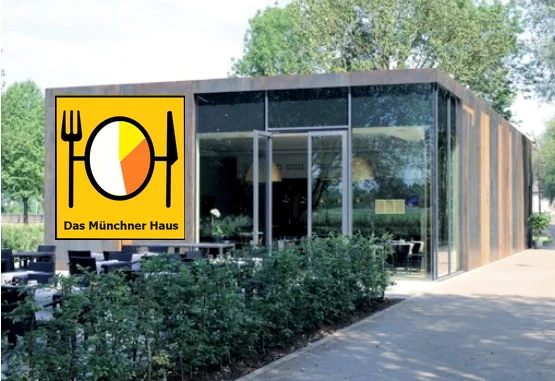
An example of these principles applied to a small Restaurant could look like this. Notice the sitting garden surrounding the outdoor dining area. Sitting gardens are designed outdoor spaces featuring benches, chairs, or, pergolas dedicated to relaxation and viewing, effectively transforming a garden space into a functional, comfortable retreat. Bauhaus can even translate into the home's garden.

DasMunchnerHaus.webp
 
Back
Top