• You're one step from joining Tiny Home Forum – Space Saving Hacks, Off-Grid Living & DIY Builds.
    Create a free account to post, follow threads, and never miss an update.  Sign up free →

DIY off-grid tiny home wins and lessons learned

Joined
May 11, 2025
Messages
11
Built a 12x12 tiny home for just $3K relying on repurposed lumber and old RV parts for the essentials. Spent two years roughing it in a canvas tent while planning everything out. The 500W solar setup, rain catchment and wood stove keep things comfortable and I've learned a ton about low cost off-grid living. Anyone else tried this without bleeding your wallet?
 
Built a 12x12 tiny home for just $3K relying on repurposed lumber and old RV parts for the essentials. Spent two years roughing it in a canvas tent while planning everything out. The 500W solar setup, rain catchment and wood stove keep things comfortable and I've learned a ton about low cost off-grid living. Anyone else tried this without bleeding your wallet?
Amazing! I'm dreaming of something similar. I wonder what your budget is?
 
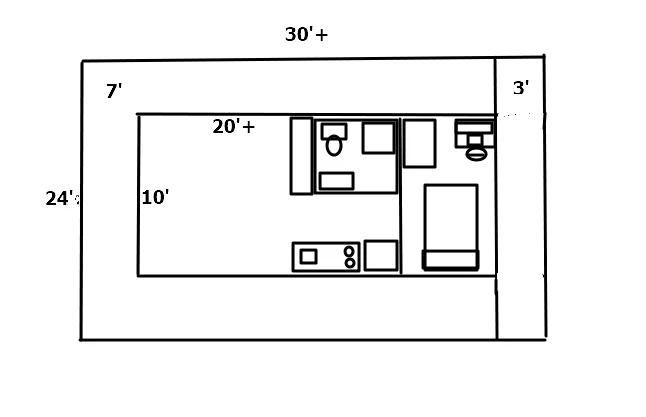
I haven't yet......just shopping for ideas now. Then trying to see what I could adapt from each Tiny Home system. Example, heating & a/c from the Earthship, quick build from an ISC, Roof Trusses to create porches on three sides of the Tiny Home so I could always be sitting outdoors in pleasant sun or shade. Then on the west end of the home allowing for a small tool shed that would help insulate the bedroom on the west end of the home. Bedroom would have a door access to the shed and doors on either end of the shed opening onto the porches on the long sides of the home. Porches could have doors with steps to provide safe emergency exits. The house may be 10 X 20+ and the porches possibly screened in starting with the shaded side of the home.

So in the more tempered times of the year one could choose where to sit on the 3 porches in order to be comfortable. But at 24 X 30 you would be looking at 720 sq ft overall with 490 of outdoor living space & 200+ of indoor living space. (which would be easy to heat or cool)

Tiny Home Sketch 1.webp
 
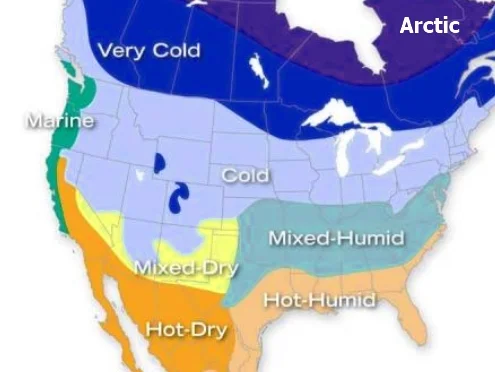
If you're in Southern Canada, the USA, or northern Mexico, here is a map showing the prevailing temperatures & humidity. This may help you select the type of Tiny Home that would best suit your needs.

USA Temp Humidity.webp
 
Appreciate all the input! My budget was around $3K, stretching every dollar with repurposed materials. I love the idea of adapting different tiny home systems to porches for shade and insulation. It sounds like a smart move. That climate map is also helpful; selecting the right setup for the region makes a huge difference. What's been the biggest challenge in your planning so far?
 
Right now i'm living in class a motorhome, i got for 2k, it wasn' what i was looking for. Was looking for travel trailer, but this fell at my feet. The idea of everything already there and needing something quick, is why i bought it.
I dont really like it, and there are issues with being 35 yrs old.
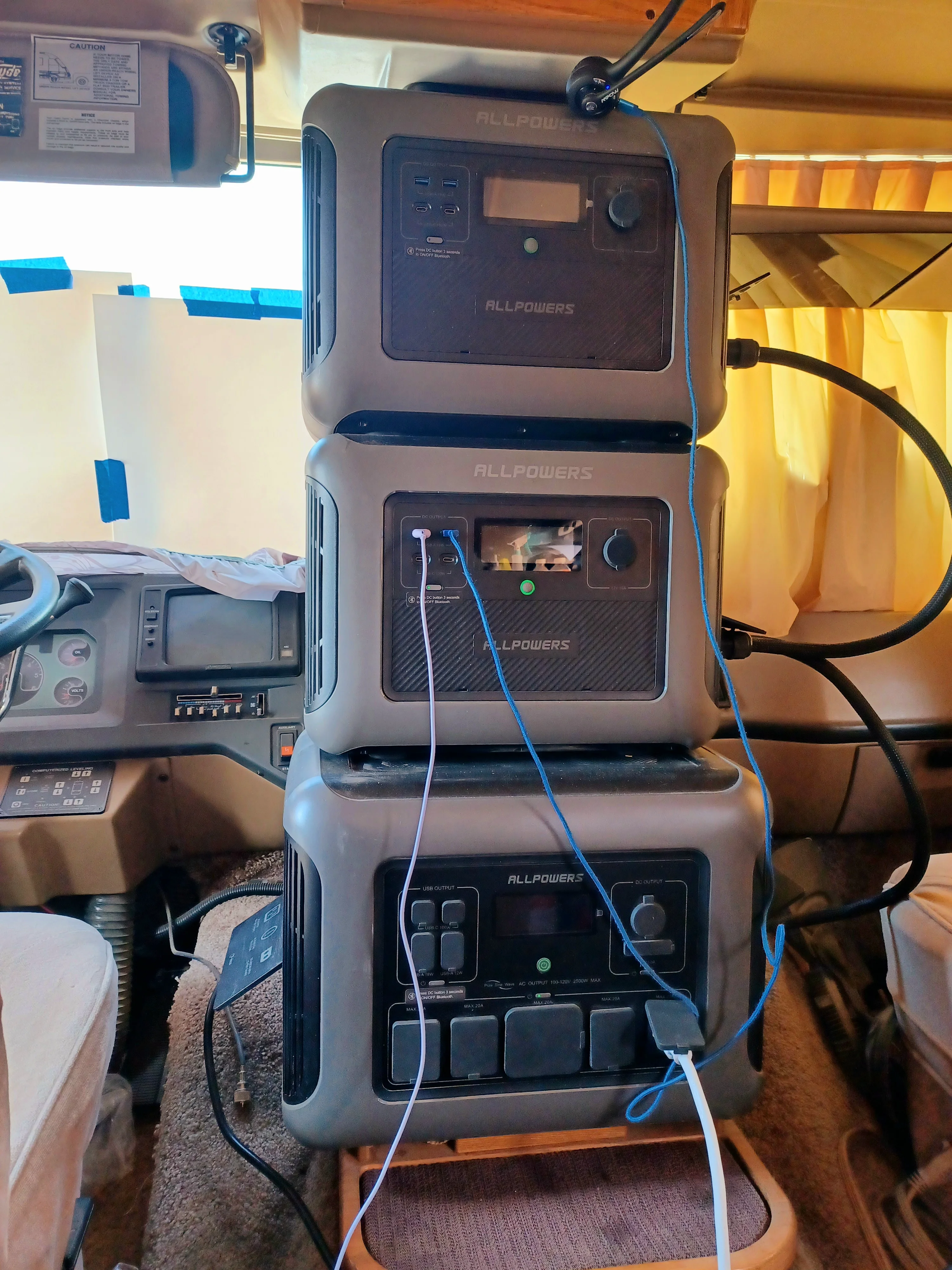
Here is my power station.... 4500w
 

Attachments

  • 20250620_163340.webp
    20250620_163340.webp
    1.3 MB
For my planning it's been finding property with the right southern exposure. (talking small "Earthship" house)

Then not being too far from a sizable town, hospitals, grocery stores, and general supply such as Walmart/Lowes/Home Depot etc.

Size of ground....5 to 10 acres. Sounds like a lot but my plan is off grid and to stable some horses & board livestock. And investigate some other Govt ag programs.

That's my challenge. But I think I can do it. One of the issues people have around here is the land brokers buying up farmsteads and making subdivisions out of them. It's very profitable and they do everything to prevent ag business anywhere around the developments they plan to undertake. (think smell and animal noise)
 
@desertrat I understand the need to grab a quick solution when you need one. An old RV can be an excellent source for parts if you build something new later. Are you planning to use that large power station for a future stationary home?

@eDJ_ Finding the right land with those specific needs is a huge challenge. It's tough to compete with developers for that kind of property. Have you located any areas that are more open to your type of project?
 
The rv was not so much a quick solution. Athough buying a 35 yr old full size motorhome that does not run, was not my focus. It did fall at my feet at the right time and price. Shortly after i got my hands on 3 lots in a row, with a well (needing some attention) to run to the other 2 lots. Thats when shed house became a focus. Selling the lots with water and power, springboards me into developing more lots to sell.....
Since moving to the area in 99, i lived in 8x8 underground house, 13 foot travel trailer, unfinished earthship, small house built with pallets around small travel trailer covered in roll roofing and and a converted school bus....
 
Last edited:
That's an amazing list of past homes and you've a great deal of real world experience with this lifestyle. Acquiring 3 lots with a well is a fantastic opportunity!

Using the power station as functional furniture is a brilliant, practical touch.
 
In my area it will be much easier to find land as I've described. Not everyone wants to settle around this part of the world and real estate development is a bit stagnant in most farm land areas. Where the developers want to buy is near rivers and bodies of waters and some along hill sides or tops with views of rivers, lakes, or towns. (or combination of rivers from a hill top/side where flooding is no threat. Similar with a view of a beach near the ocean or gulf.

images


City lights at night are prime property. Especially with a deck for entertaining with such a view.

images


But for me, I'd rather be out in a more rural setting to be off grid.
 
That's a very fortunate situation to be in with your local real estate market. It's a huge advantage that the developers are focused elsewhere, leaving the farmland more accessible for your type of project. What's your next step for starting the actual property search?
 
I would like to get with a friend who has his own small airplane and fly over some areas that would be high and dry and have the characteristics I'd be looking for. In the county I'm looking at the county is divided into 12 "townships" or sub counties. Some of those have very low tax bases and little in the way of zoning & laws regarding what you do there.

A lot of these lands are owned by widows who would like to sell and move to the city for considerations of convenience, medical attention, and social life. What I would develop would be attractive to younger people as it would more or less pay it's way for them so the living cost thee would be nearly at a break even.
 
@eDJ_ getting a view from the air is a brilliant approach for scouting land. Focusing your search on townships with fewer regulations will save you many complications later.

@Sarah a drone could be very useful for getting a closer inspection of interesting parcels.
 
I have more contacts with pilots with small aircraft than guys with Drones. I purchased a Drone awhile back but it is limited to flight time and RC range. (deal on a brand new one....I fly it around my house to inspect rain gutters for debris etc) It does work with my "data" and cell and I can record a fly over. But looking down from about 5 to 8 K feet with a video camera would probably serve me best.

Part of what drives my choice of neighborhood is my own age and the availability of medical facilities. Don't kid yourself, if a heart attack comes during a winter blizzard or a venomous snake bite in the summer when rural roads are being worked on & small bridges are under repair thus inhibiting progressing to medical facilities then being too far out in the rural areas may not be wise. This could happen to anyone as early in mid 30's. Even a difficult pregnancy requiring fast delivery to a hospital. A child playing in what looks like a serene country environment may be harmed by a wild animal. All things to consider beyond Taxes, and local government policies requiring any resident to be connected to the "grid".

This should be part of the composite of one's base of wisdom underlying making a good choice. Not to mention the kind of people who inhabit that area. Especially if police & security aren't all that prevalent.

Do you want to install outdoor lighting for night time hours and keep big dogs? Keep firearms and become proficient with them?

I live where this is common. But I've been here for some time and am known by those in my community. Still, the community is not cohesive in case of an emergency.

If you are looking into an area where you do not know anyone, there may be registered sex offenders. Here is a link to a national data base anyone can look thru that even goes by zip codes.

National Sex Offender Public Website
 
You've laid out a comprehensive list of considerations that go far beyond just finding a pc of land. Balancing the desire for a rural, off-grid life with the practical need for medical access and community safety is a fundamental challenge for anyone. Even with my small setup, knowing the emergency response time and who my neighbors are was an essential part of feeling secure. With so many important variables to consider, how do you plan to prioritize them when you finally evaluate a specific property? Do you have a set date in mind for when you'll begin your aerial scouting flights?
 
No, no set date as of yet.

One of the things I know about from Realtors that I know iss a software they use to assist clients find what they are looking for quickly and efficiently.

Claritas PRIZM is a geodemographic segmentation system used in various industries, including real estate, to understand and target specific consumer groups. It classifies US households into 68 distinct segments based on a combination of demographics, consumer behavior, and lifestyle indicators.

Time was that it was free and anyone could use it. It started as a project/tool from the Nielsen TV Ratings People.

Here is a complete overview of Claritis PRIZM.

Claritas PRIZM

PRIZM 68 Segments


If you wanted to see all 68 segments you can get a preview for zero dollars.

This system goes by zip code. Each zip code will have anywhere from 3 to 5 or more "segment" icons which describe the people who live in the area. if you purchase the professional site you will be able to know more about the area than many of the people living there. What their politics are, what kinds of magazines, newspapers, books, TV, Radio etc they like and much much more. (yeah.....you've heard it before...there is no such thing as privacy anymore) It's all about big business & customers.

For example, if you lived outside of Philadelphia, PA and your company was transferring you to San Diego, CA. Your Realtor would only have to ask your zip code and then go into their software for available housing in San Diego to find a zip code there that would match close to where you live now. If you were getting a big promotion and were to have a better income and wanted to move "UP", the Realtor could use the software to calculate what a better neighborhood would be for you and then make a listing of houses available there to present you. Magic? No, just software and Census Information.

In this way you could look before you leap from your computer. of course the Realtor may work with other Realtors in the new area to make sure you aren't buying a home next to a registered Sex Offender, or some other "crazy" with a police record for violence etc.

Of course Realtors aren't going to tell you about this stuff much less school you in the software they have and use. I just happen to know about this one. Bank's Loan Departments may make use of something like this too. If you ever wonder why they don't want to loan on a place you may be interested in.
 
Using PRIZM is a fascinating angle for scouting locations. I can see how a Realtor would use it for matching suburban lifestyles but does it provide useful data for finding raw land suitable for an off grid build? For instance can it filter for things like zoning that allows for unconventional structures or the availability of water rights? My own land search involved a lot of time with county GIS maps and zoning code books which felt more direct. In any case, I wish you success in finding the perfect spot for your build.
 
I don't know that PRIZM would be ideal for those technical details. But Realtors will likely have other software that could query for answers to those questions.

My Google search just now revealed this:
Finding the perfect raw land for an off-grid build requires meticulous due diligence and the right tools to uncover crucial information about the property and its surrounding area. Here's a breakdown of helpful software and data resources, focusing on key aspects like water rights and zoning:

1. Property and GIS data
  • County Assessors' Websites/GIS: This is your primary source for detailed property information. Most county assessor websites offer online GIS (Geographic Information System) maps that allow you to:
    • Visualize Parcel Boundaries: See the exact property lines and dimensions.
    • Access Parcel Information: Look up property owner details, tax records, and sometimes even prior sale history using parcel IDs or addresses.
    • View Zoning Maps: Overlay zoning districts to determine permitted uses for the land.
  • Specialized Land-Search Platforms:
    • LandGlide: This app offers a comprehensive database of parcel data, property lines, and ownership information across the US, often with a free trial period.
    • Regrid: Another platform providing comprehensive parcel data, including boundaries, buildings, addresses, and geographic enrichments across the U.S. and Canada.
    • LandLeader: A network specializing in rural real estate, offering access to advanced land technology and expertise, particularly useful for properties with specific features or for navigating complex regulations.
  • USGS National Map & Geospatial Data Gateway:
    • The USGS National Map provides pre-generated downloadable topographic maps and GIS data layers, including hydrography, boundaries, transportation, structures, and elevation contours.
    • The NRCS Geospatial Data Gateway offers a vast library of high-resolution vector and raster layers related to environmental and natural resources, including soil data.
2. Water rights and resources
  • State Water Resources Departments: These agencies manage water rights and provide information on water withdrawal permits and regulations. In Ohio, for example, the Ohio Department of Natural Resources (ODNR) handles this, including a program for registering facilities withdrawing more than 100,000 gallons per day.
  • EPA Drinking Water Mapping Application (DWMAPS): This online tool helps identify drinking water providers, potential contamination sources, and protection areas, which can be useful for assessing potential water sources on or near the property.
  • Environmental Impact Assessments (EIAs): These reports assess the potential environmental effects of development projects, including impacts on water quality. They can be found through local and state agencies or, if the land has undergone prior development, potentially through property records.
  • Due Diligence with Water Professionals: Consulting with professionals like well drillers or hydrogeologists can provide crucial insights into local groundwater availability, quality, and well permitting requirements.
3. Zoning and land use regulations
  • County and Municipal Planning Departments: These departments are responsible for enforcing zoning ordinances and land use regulations. You'll want to consult their websites or directly contact them to confirm:
    • Permitted Uses: What activities and structures are allowed on the property?
    • Building Codes: What specific codes and regulations apply to off-grid structures like cabins or solar installations?
    • Variance and Permit Processes: How to apply for special permits or variances if your intended use isn't explicitly allowed.
  • National Zoning and Land Use Database (NZLUD): This resource provides a database of key elements of zoning codes across over 2,600 municipalities in the U.S., offering insights into zoning trends and common restrictions like minimum lot size and building height.
Important considerations for off-grid land
  • Surveys: A professional land survey should be obtained to confirm property boundaries and identify any encroachments.
  • Environmental Assessments: A Phase I environmental site assessment can be considered to check for contamination and potential environmental risks on or near the property.
  • Accessibility: Ensure the property has legal and practical access, especially if it's raw land.
  • Local Resources: Local real estate agents, land planners, environmental consultants, and tax advisors can provide specific local guidance and expertise.
Using these resources and exercising thorough due diligence can improve the chances of finding raw land that is both suitable for off-grid living and compliant with local regulations.
 
PRIZM really zeroes in on demographics and consumer behavior, but it doesn't cover the essential aspects you'll need for going off-grid, like zoning, building codes, or water rights. You're spot on that county GIS and zoning records are much more straightforward. While PRIZM can point out rural areas with a self-sufficient attitude, you'll definitely need to dive into county resources for the legal and technical details.
 
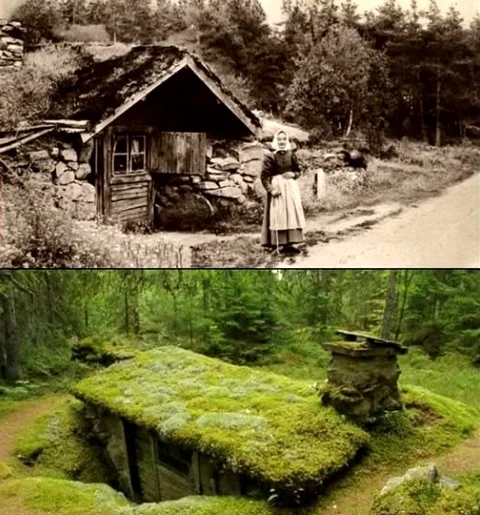
When I saw this Swedish Tiny Home from the 17th and 18th century I thought of this thread. Yes that would have totally been off grid back then. Yet it served it's purpose.

It's called a "Backstuga" and is an earth bermed cottage.

In the dense forests of southern Småland, Sweden, a small cabin nearly disappears into the landscape. Known as a backstuga, or "hill cottage," this type of home was a lifeline for Sweden's poorest during the 17th and 18th centuries. Built partially into a hillside, these dwellings featured three wooden walls, with the hill itself forming the fourth. The roofs, covered with sod, merged with the surrounding earth, providing both insulation and camouflage.
These cottages were often just a single room, offering little more than the bare essentials for survival. Backstugas were particularly common in southern and southwestern Sweden, where wood was a luxury and practicality shaped every element of construction. While rare today, they stand as a reminder of a time when ingenuity met necessity in the face of hardship.

Backstuga Swedish Tiny Home.webp


So if one wants to go off grid on property with some hillside, this may be a solution.
It also provides for a living roof in it's design. As for waterproofing the walls there are
numerous products for this. One known as Liquid Rubber has a considerable stretch
ability while sealing the water out. (Ames Block & Wall liquid rubber offers 1800% elasticity)

One gallon of it will cover 100 sq ft of wall. Ames recommends two coatings. This assumes your
wall will have a smooth finish. But this is an area where you don't want to scrimp. If you build a Tiny Basement Home, do it before earth berming. You may also want to install drainage around the foundation too.

f83a86555ea0c1c3258d36d47267813a.jpg


The interior of such a room should stay around 50 to 55 degrees F all year around. So heating would only require raising the temperature another 15 degrees F to be comfortable.


Ames Block & Wall Liquid Rubber
 
Back
Top